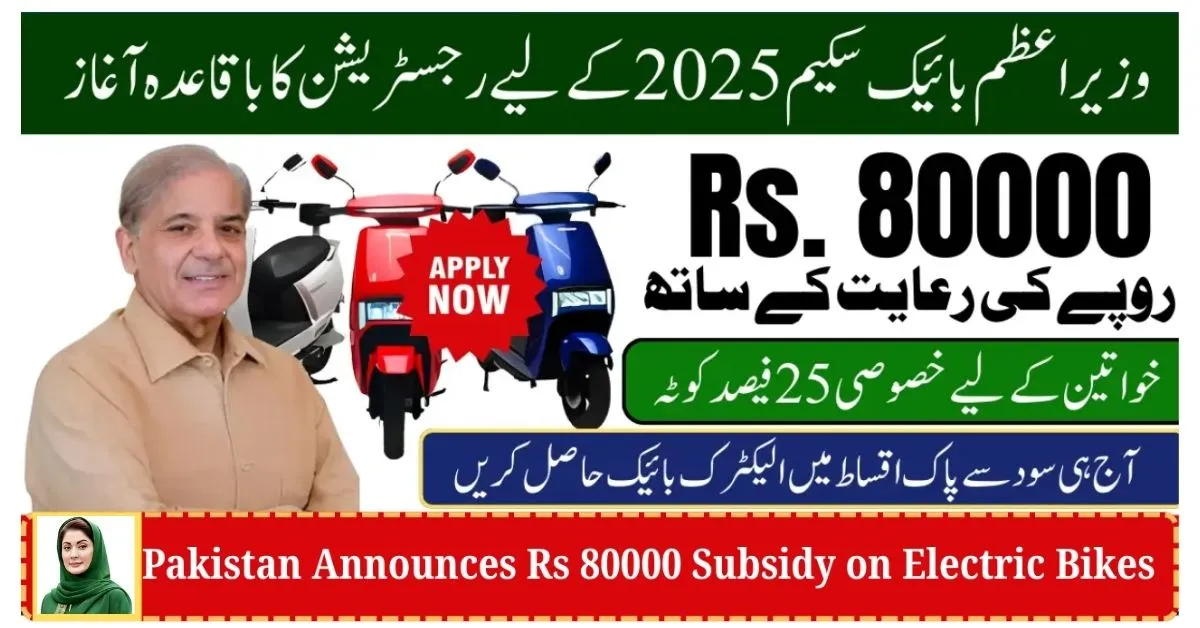
Pakistan Announces Rs 80,000 Subsidy on Electric Bikes — Full EV Policy 2025 Details
Pakistan’s federal government has taken a major step to accelerate transport electrification by announcing an electric-vehicle policy package for 2025–2030 that includes a direct subsidy of up to Rs 80,000 per electric bike (e-bike). The move rolled into a broader National EV / New Energy Vehicle (NEV) strategy aims to make last-mile electric transport affordable, reduce fuel import bills, create local green jobs, and lower urban air pollution.
This article breaks down the key elements of the policy, who’s eligible, how the subsidy works, rollout phases, financing and charging infrastructure plans, and what buyers should know before applying.
Why the government is Subsidy on Electric Bikes
Pakistan faces multiple, overlapping economic and environmental challenges: high fuel import costs, congested cities, and worsening air quality. E-bikes are a pragmatic early win they cost less than four-wheeled EVs, require smaller batteries, and directly benefit students, delivery workers and low-income commuters. The Rs 80,000 subsidy lowers the upfront cost barrier and is intended to speed adoption while local industry scales up assembly and service capacity. Several government briefings and a high-level review in June 2025 made the policy direction clear: prioritize affordable two- and three-wheel electrified transport as a first step.
What the Rs 80,000 Subsidy on Electric Bikes covers (and what it doesn’t)
- Subsidy amount: Up to Rs 80,000 per eligible electric bike a direct support amount intended to be deducted from the purchase cost or applied as a rebate/transfer to partner banks/retailers. Exact disbursement mechanics may vary by phase and implementing agency.
- Typical discount impact: For many mainstream e-bikes priced in the range of Rs 200,000–Rs 350,000, Rs 80,000 can reduce the effective initial payment by ~23–40%, making instalment plans much more affordable.
- Horsepower Pakistan
- Not included: The subsidy typically does not cover optional accessories, extended warranties, or post-sale service fees unless explicitly included in scheme documents. Buyers should confirm package details with authorised dealers and banks. (See “How to apply” below.)
Also Read: CM Punjab Bike Scheme 2025 – A Complete Guide for Students in Punjab
Who is eligible?
The government is prioritizing groups that will most benefit from affordable daily transport and that can quickly scale modal shift:
- Students and young commuters many provinces and the federal scheme include student quotas or targeted windows for registration.
- Low- to middle-income workers and delivery riders those who rely on two-wheel transport for livelihoods.
- Women and social-inclusion targets some phases emphasize female beneficiaries to improve mobility and economic participation.
Exact eligibility rules (age ranges, household income thresholds, education verification, and CNIC requirements) are specified on the official programme portal and in partner-bank application forms; applicants should always consult the official portal when applying.
Rollout plan and scale (phases)
The policy is being rolled out in phased waves linking subsidy allocations, digital applications and a computerized beneficiary selection (e-balloting) or merit-based lists:
- Phase 1 (pilot/early beneficiaries): Tens of thousands of e-bikes various reports refer to an initial allotment of 40,000 e-bikes in early phases, with some provinces running district-level balloting.
- Subsequent phases (scale-up 2025–2030): The broader EV/NEV policy covers increased yearly targets and subsidized three-wheelers/loaders as well, with policy timeframe extending through 2030 to support industry localisation.
The combination of digital registration, partner banks, local assemblers and e-retailers is meant to prevent bottlenecks encountered in previous vehicle subsidy campaigns.
Also Read: bikes.punjab.gov.pk | CM Punjab e-Bike Scheme 2025 Complete Guide
Financing, instalments and partner banks
Subsidy alone isn’t the whole story the scheme pairs the Rs 80,000 grant with lender partnerships and concessionary financing:
- Interest-subsidized or interest-free instalments: Several participating banks and finance houses are offering low-interest or interest-free installment plans, with the government covering part or all interest costs in some product offers. This reduces monthly payments for beneficiaries.
- List of partner banks / financiers: The rollout typically involves state and private banks (National Bank of Pakistan, Bank of Punjab and others named in scheme guidance), plus fintech partners to process online applications and auto-debits. Confirm the current partner list on the official portal before applying.
Also Read: Sindh Govt Announces Pink Scooty Scheme 2025: Online Apply Now
Charging & infrastructure commitments
An effective e-bike ecosystem must include convenient charging and maintenance:
- Charging network targets: The NEV policy includes plans to expand charging points at petrol stations, malls, universities and public spaces, with incentives for private operators to install chargers in urban corridors.
- Battery swap and service centres: The policy encourages battery-swap pilots and authorised service workshops — important for users without secure home charging. Prospective buyers should check battery policy (ownership vs. leased batteries) before purchase.
Local industry & jobs
One long-term aim of the EV policy is localisation: by stimulating demand through subsidies, the government hopes to attract investment in local assembly, component manufacturing (motors, battery packs), and a repair/service ecosystem — creating jobs while reducing import dependence for finished vehicles. Multiple stakeholders local assemblers, international brands and banks — are positioning to supply the first large purchase cycles.
Also Read: CM Punjab Bike Scheme Apply Online 2025 – Last Date Announced & How to Apply
How to apply: step-by-step (what buyers need to do)
Implementation details differ slightly by portal and phase, but the common steps are:
- Check official portal / authorised news release for the latest dates and eligibility criteria (the federal portal and provincial dashboards are primary sources).
- Register online with a valid CNIC, mobile number and basic personal information. Expect to upload proof of student status or income where required.
- Select model & dealer from the list of approved e-bike models or dealers to ensure warranty and subsidy compatibility.
- Complete financing application through partner bank or finance partner (if taking instalments); the subsidy is usually reflected in the net financed amount or as direct transfer to the dealer/bank after approval.
- Wait for selection — some rounds use e-balloting/computerized lotteries for high demand; selected applicants will be notified via SMS/email. Selected beneficiaries then proceed to pay any downpayment and schedule delivery.
Practical tips for buyers
- Confirm the total out-the-door price. Ensure the dealer’s quotation shows the subsidy deduction and what the buyer actually pays (including registration and delivery).
- Ask about battery ownership. Some programmes use battery leasing to lower upfront cost; know whether you own the battery or will subscribe to swaps.
- Warranty & service network. Buy from an authorised dealer with a local service centre to avoid long downtime.
- Documentation. Keep CNIC, proof of domicile and any student/employment proof ready; digital portals typically require scanned documents.
Also Read: CM Punjab Loan Scheme 2025 Online Apply – Full Guide for SMEs
Early results & criticism
Early press coverage and government updates indicate thousands of registrations and tens of thousands of bikes allocated in initial phases, with e-balloting used to select beneficiaries in high-demand areas. At the same time, critics urge careful implementation to avoid fraud, ensure transparency in beneficiary selection, and prevent post-sale issues like spare-parts shortages or long service response times. The government has responded by centralising applications and involving multiple agencies in oversight.
The bigger picture: electrification beyond e-bikes
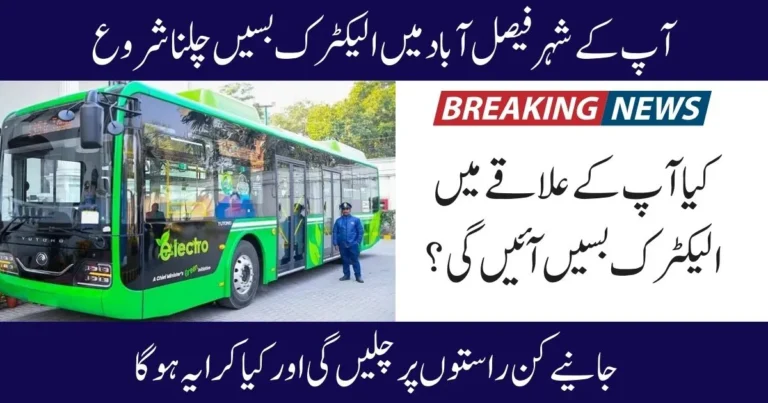
While the Rs 80,000 e-bike subsidy is headline news, the NEV/EV Policy 2025–2030 covers a wider agenda: incentives for electric rickshaws, buses and commercial vehicles, localisation incentives, import tariff adjustments for EV components, and public-sector procurement of EV fleets. The e-bike subsidy is a near-term demand stimulus intended to catalyze industry and habits, while the broader policy addresses supply chains and infrastructure for long-term transition.
Also Read: BISP 8171 District Wise List 2025 – Latest Updates
FAQs
Is the subsidy available nationwide?
The federal policy applies nationwide, but provincial rollouts and beneficiary quotas can vary; always check the official portal or press release for province-specific instructions.
Can I use the subsidy to buy any e-bike model?
Only approved models and authorised dealers participating in the scheme qualify. Confirm model eligibility before deposit.
How long does registration take and when will I get the bike?
Registration is digital and quick; selection/delivery timelines depend on phase and stock. Some pilots used a computerized ballot and announced winners in weeks.
Will this raise electricity demand / bills?
E-bikes consume little electricity compared to cars; charging costs are generally much lower than petrol costs for equivalent daily distance. The government is also encouraging off-peak charging and renewables integration.
Conclusion
The Rs 80,000 subsidy on electric bikes is a high-impact, politically and economically sensible first step in Pakistan’s EV strategy. By lowering the initial cost of ownership and pairing grants with affordable financing and a phased rollout, the government aims to jumpstart demand, create local manufacturing opportunities, and cut emissions from urban transport. For prospective buyers, the key is to follow official channels, confirm the subsidy is applied in writing, and choose authorised dealers with local service networks. If implementation is transparent and operational bottlenecks are managed, this programme could significantly change how millions of Pakistanis commute cleaner, cheaper and greener.